Femoral nerve
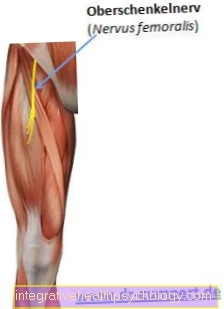
The femoral nerve belongs to the peripheral nerves and arises from the lumbosacral plexus. Its supply area is primarily the muscles of the thigh and the knee area. Therefore, it generally innervates all flexors of the hip joint

The femoral nerve belongs to the peripheral nerves and arises from the lumbosacral plexus. Its supply area is primarily the muscles of the thigh and the knee area. Therefore, it generally innervates all flexors of the hip joint
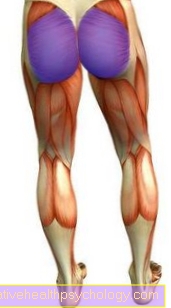
The gluteus maximus muscle covers the buttocks area and is responsible for stretching the thighbone in the hip backwards. In addition, it prevents tipping over when the upper body is bent forward through strong contraction
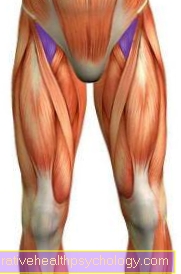
The lumbar iliac muscle (M. iliopsoas) pulls from the lumbar vertebrae through the pelvis to the lesser trochanter on the thigh bone, is the strongest flexor in the hip joint and thus the strongest antagonist of the gluteal muscles. He contracts when he stands up
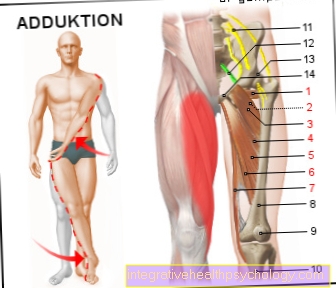
Adductors are muscles used to pull parts of the body towards the trunk. There are adductors on the thigh, foot, and hand. On the thigh, the adductors can be subdivided into three groups: superficial, medium and deep
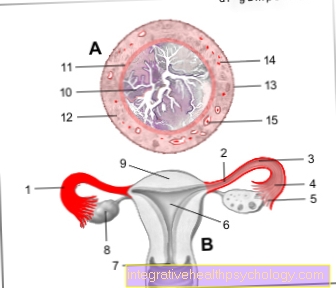
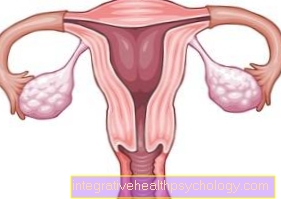
The fallopian tubes (salpinx) are laid out in pairs and represent the connection between the ovary and the uterus through which the mature egg migrates to be fertilized. An ectopic pregnancy is and must be life-threatening for the mother
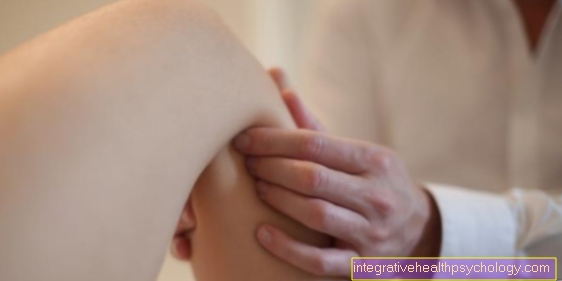
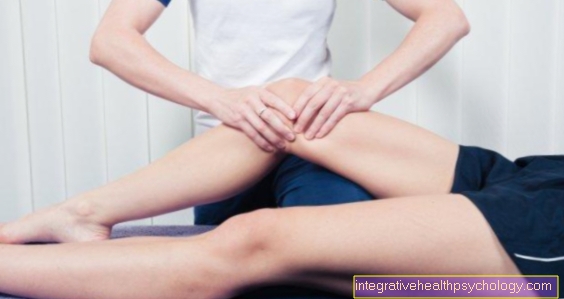
The hollow of the knee is located on the back of the knee, bounded by muscles. Important vascular and nerve structures run in it. Pain in the hollow of the knee can be caused by a thrombosis, a muscle strain, a Baker's cyst or meniscus
The egg cell is the female germ cell and is used to multiply and pass on the genetic makeup of the mother to the child. It happens again and again that women do not get pregnant despite the greatest efforts, so that the only way out for them is the artificial one
Pronation is the movement you make when turning your hand and forearm inward. The elbow joint, which is a hinge and ball joint at the same time, and thus the crossing of ulna and ulna, is involved in this movement
In a supination, the inwardly turned forearm is turned outward again. Thus the ulna and radius are parallel to each other and are no longer crossed.
The arterial supply of the leg is carried by the external and internal pelvic arteries and their branches. The superficial veins run just under the skin with no accompanying arteries, while the deep veins often run like the arteries
The glucocorticoids are steroids and take on so-called catabolic tasks in the body. They mobilize the resources stored in the body and can be converted into natural hormones made by the body, and into synthetic glucocorticoids that are in
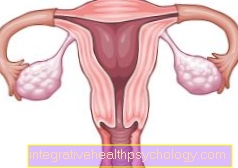
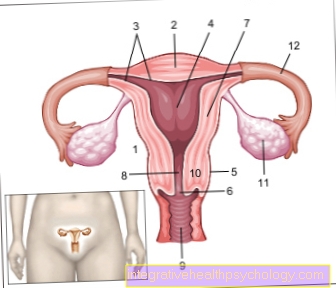
The womb (uterus) is one of the primary sex organs in women and is home to the fetus during pregnancy. It has the shape of a stretchable muscle pocket that opens into the vagina and thus through contraction at the end of pregnancy
The semimembranosus muscle (flat tendon muscle) consists of a 5 cm wide and 3 cm thick muscle belly. The semimembranosus muscle causes the lower leg to flex in the knee joint. He also works as an internal rotator of the knee joint and extensor
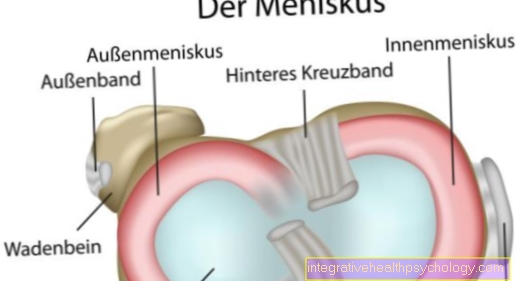
The inner meniscus is C-shaped and larger than the outer meniscus. It is anchored in the bone at its anterior and posterior ends and fused with the joint capsule and the inner ligament. The inner meniscus is therefore much more likely to suffer from injuries
The outer meniscus is more curved than the inner meniscus. It is anchored to its anterior horn and its posterior horn in the shin bone.Because it is not fused with the collateral ligament, it is less under tension when moving and is therefore
Estrogen is produced in the ovaries, placenta, adrenal cortex and testicles. The estrogens as part of the reproductive hormones influence the development of the female sexual organs. In addition, these hormones work in the process
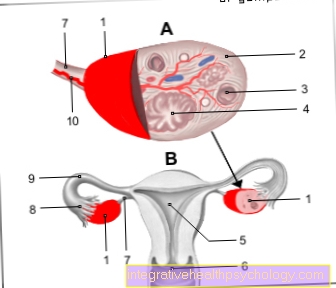
The ovaries are part of the woman's reproductive system. It is in the ovaries that the egg cells mature and some hormones are produced. However, it can also lead to numerous diseases such as cysts, inflammation, contortions and adhesions
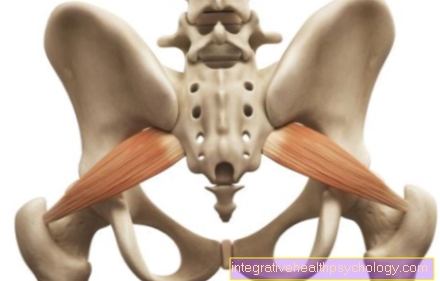
The pear-shaped muscle (M. piriformis) belongs to the deep hip muscles and connects the sacrum and the thigh bone from behind. Its functions include external rotation and the splaying of the thigh. In its immediate
The pair of ovaries in women are located to the side of the uterus in the pelvis and are important for the maturation of eggs for ovulation. Furthermore, essential hormones such as progesterone, HCG and estrogen are produced in the egg cells
the medical information portal. Here you will find information on almonds that is understandable for laymen.