Category : Anatomy-Lexicon

spleen

spleen

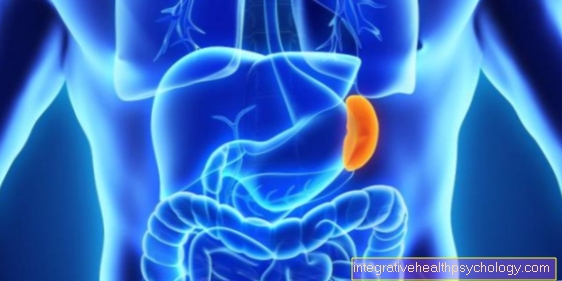
The spleen is located in the upper left abdomen. Their main function is to sort out erythrocytes (red blood cells) that are too old by migrating them through a close-knit network through which only new, flexible cells come. But it is also part of the
Large intestine

Large intestine

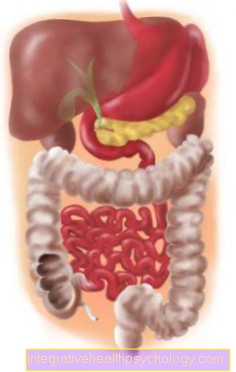
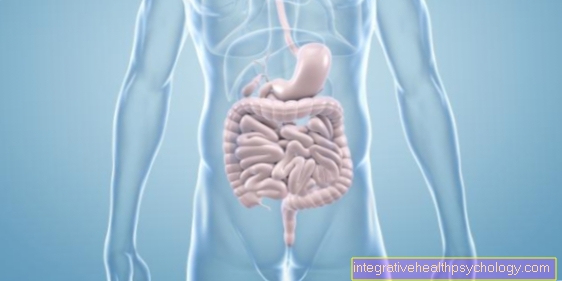
The large intestine joins the small intestine as the last section of the digestive tract and frames it. The main task is to return fluids and minerals to thicken the stool. The large intestine is colonized with bacteria that are important

Joint capsule

Joint capsule

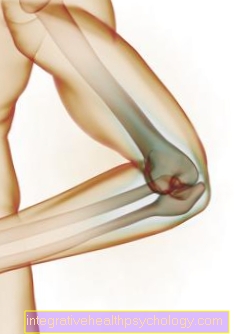
The joint capsule surrounds a joint and seals off the mechanical movement of the articulating bones towards the outside. The outer layer consists of connective tissue, which gives the capsule a certain strength. The inner layer of the capsule represents


Spinal canal

Spinal canal

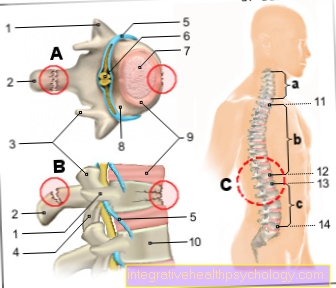
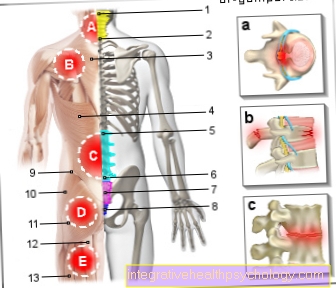
The spinal canal is also called the spinal canal or spinal canal. It is formed by the foramina vertebralis of the vertebral bodies of the cervical, thoracic and lumbar spine as well as the sacrum. It forms the bony structure for the spinal cord, the





Glucagon

Glucagon

Glucagon is a hormone in the human body that has the task of raising blood sugar levels. It therefore acts as an antagonist to the hormone insulin. Generally speaking, glucagon is used to mobilize energy reserves by depleting them

Sciatic nerve

Sciatic nerve

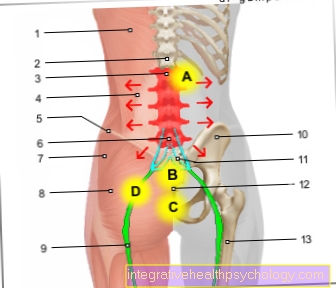
The sciatic nerve is the longest, largest, and thickest peripheral nerve in humans. It comes from a plexus of nerves, the lumbar sacrum nerve plexus (plexus lumbosacralis), which supplies the leg and the buttocks region. When the nerve is damaged it comes

coccyx

coccyx

The tailbone is made up of about four to five individual vertebrae. However, these vertebrae are fused into a single unified bone through what is known as synostosis. The tailbone represents the lower (caudal) end of the vertebra

liver

liver

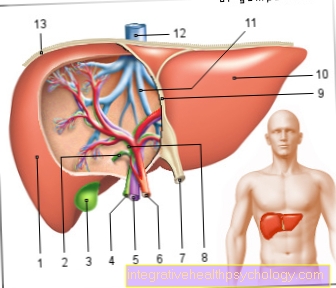
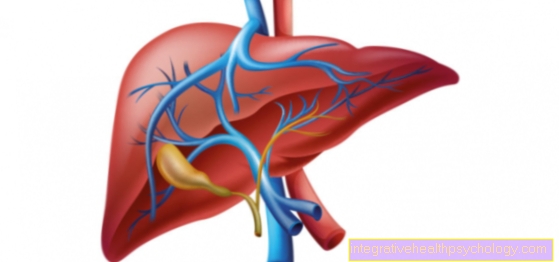
The liver is located under the diaphragm and can be palpated on the right costal arch. It weighs approx. 1 kg and is the central metabolic organ of humans and is used for the utilization of food, the provision of nutrients and detoxification

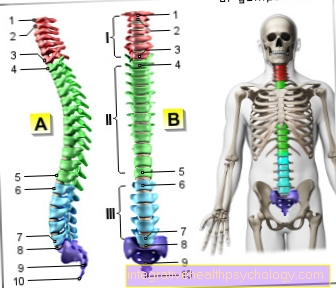
Figure spine

Figure spine

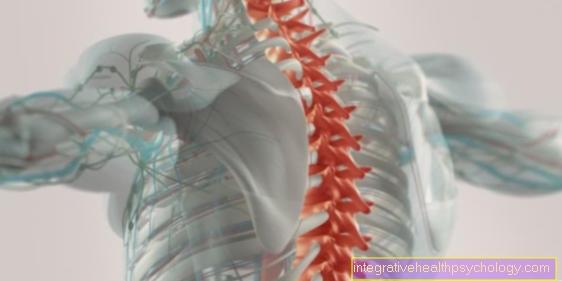
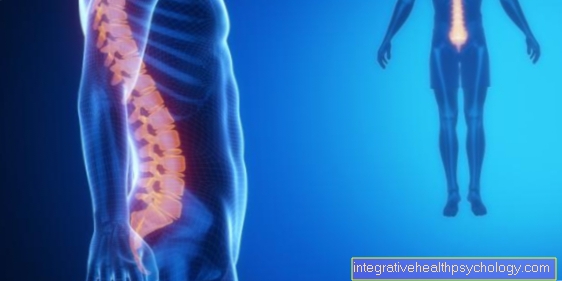
the medical table of figures. Here you will find helpful illustrations on the subject of the spine.

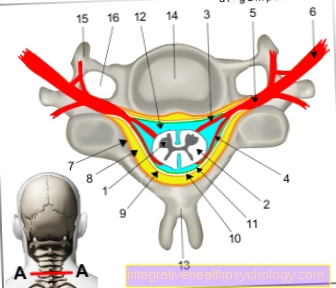
Figure spinal cord

Figure spinal cord

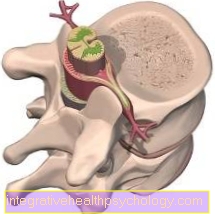
the medical table of figures. Here you will find helpful illustrations on the subject of the spinal cord.

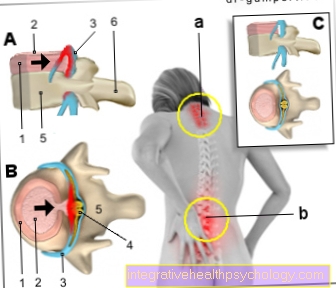
Figure herniated disc

Figure herniated disc

the medical table of figures. Here you will find helpful images on the subject of a slipped disc

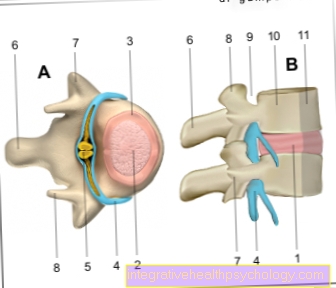
Figure intervertebral disc

Figure intervertebral disc

the medical table of figures. Here you will find helpful images on the subject of intervertebral discs.

Figure vertebral fracture

Figure vertebral fracture

the medical table of figures. Here you will find helpful illustrations on the subject of vertebral fracture.

Figure lumbar spine syndrome

Figure lumbar spine syndrome

the medical table of figures. Here you will find helpful images on the subject of lumbar spine syndrome.

The pancreas

The pancreas

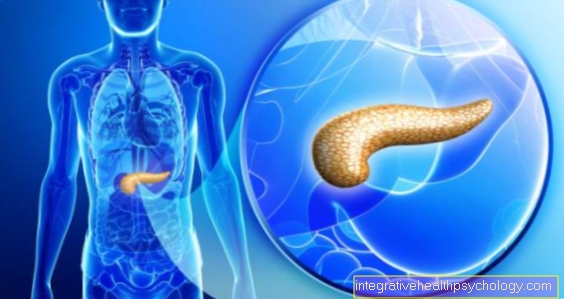
The pancreas is located in the upper abdomen between the small intestine and the spleen. Due to its appearance, the entire gland is divided into the head, body and tail. The pancreas' tasks are to produce digestive enzymes and hormones as well

The respiratory muscles

The respiratory muscles

The respiratory muscles are grouped around the lungs and make it easier for them to move when breathing. The most important respiratory muscle is the diaphragm. It separates the chest from the abdomen. The muscles that attach to the rib cage are auxiliary breathing muscles that are used in the

bile

bile

Bile is a fluid produced by the liver that is stored in the gallbladder and released after meals. It is used to emulsify fats and thus helps with digestion, while at the same time it is used to remove waste materials that the

The function of the liver

The function of the liver

The liver, the central metabolic organ of humans, has a multitude of vital functions: It utilizes absorbed nutrients and uses them to produce proteins and enzymes with various functions that act in many organs and

Bile duct

Bile duct

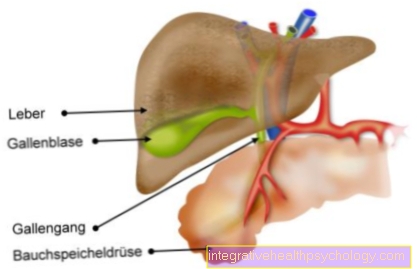
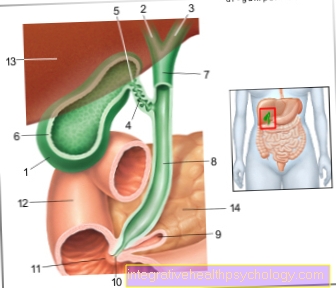
The bile duct is a duct system that connects the liver, gall bladder and pancreas. The secretions of the organs can flow through it into the intestine and digest the food. Gallstones can narrow the duct and cause pain

Gallbladder

Gallbladder

The gall bladder is a small, non-vital hollow organ that is connected to the liver by a duct system and can thus absorb the bile produced by the liver and release it after meals. There can be gallstones in the gallbladder