Category : Anatomy-Lexicon

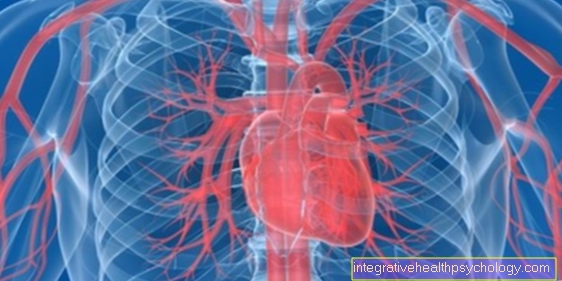
Coronary arteries

Coronary arteries

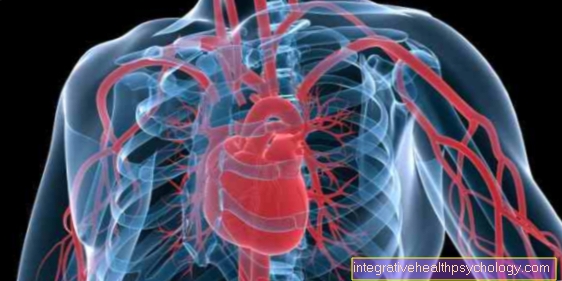
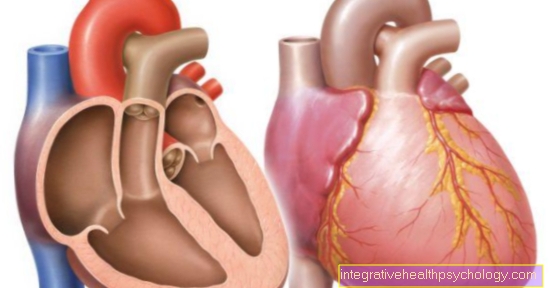
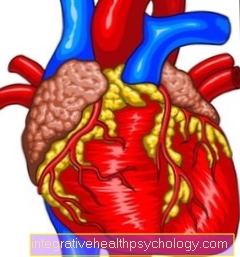
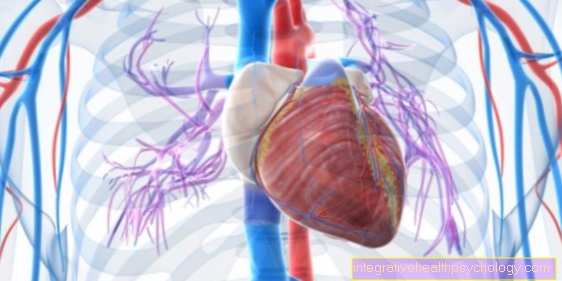
The coronary vessels supply the heart muscles with oxygen-rich blood. There are two large branches that branch out further. During a heart attack, one of the coronary arteries is blocked, which leads to a reduced blood flow to parts of the heart and
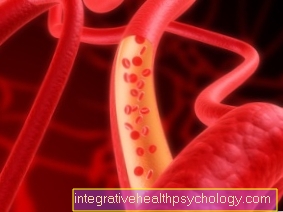
vein

vein

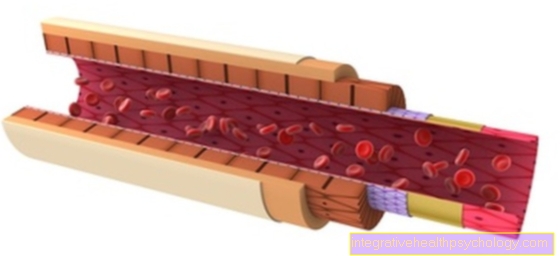
A vein is a blood vessel that carries blood to the heart. In the body's large circulation, oxygen-poor blood flows through the vein, while in the lungs, oxygen-rich blood always flows from the lungs to the heart. Veins are very elastic and can be

Esophagus - Anatomy, Function, and Diseases

Esophagus - Anatomy, Function, and Diseases

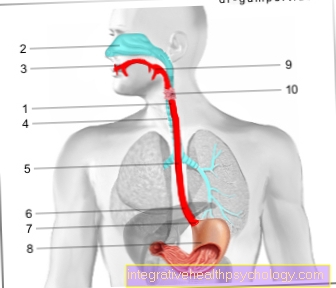
The esophagus is a muscle tube that connects the oral cavity and the stomach and is mainly responsible for transporting food after ingestion. There are a number of internal and surgical diseases

The pulmonary circulation

The pulmonary circulation

The pulmonary circulation is also referred to as "small circulation" and supplies venous, i.e. oxygen-poor blood from the heart to the lungs, where it is enriched with oxygen again and thus returned to the heart, from where it is introduced into the body's circulation or

Nerve fiber

Nerve fiber

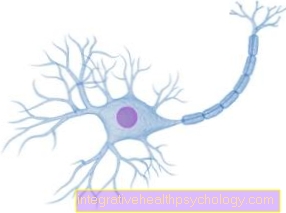
A nerve fiber is the part of a nerve that can forward or return information from the cell body. This is important in order to receive information from the body and to be able to perform movements. Strictly speaking, the nerve fiber itself exists

Spinal ganglia / ganglion cell

Spinal ganglia / ganglion cell

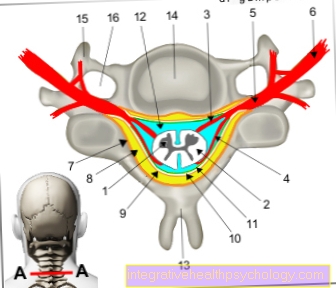
Ganglia are nodular collections of nerve cell bodies outside the central nervous system (brain and spinal cord). A ganglion is used to switch impulses from the brain to nerve endings on organs or to transmit them in the other direction

Tricuspid valve

Tricuspid valve

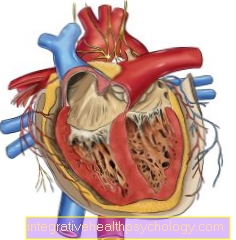
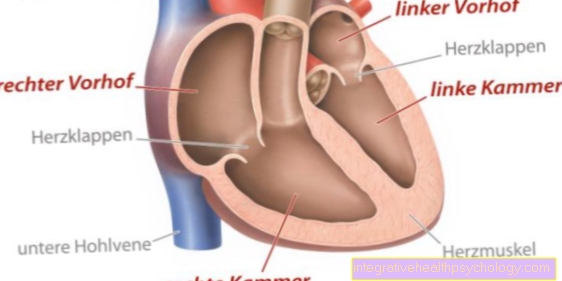
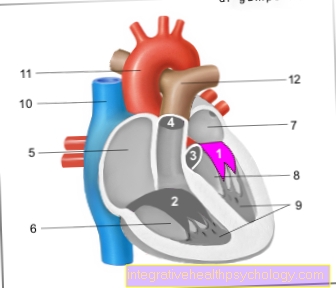
The tricuspid valve is located between the right ventricle and the right atrium. It belongs to the sail flaps and consists of a total of three sails. The tricuspid valve is significantly less affected by valve defects than the other heart valves

Vena cava

Vena cava

The upper and lower vena cava collect the body's venous, deoxygenated blood and return it to the heart. From there it goes back to the lungs, where it is enriched with oxygen before it is pumped back into the body's circulation.

Blood sugar

Blood sugar

the medical information portal. Here you will find information on the subject of blood sugar that is understandable for laymen.

Right ventricle

Right ventricle

As part of the pulmonary circulation, the right ventricle is responsible for directing oxygen-poor blood into the lungs, where it is enriched with oxygen and supplied to the large body circulation via the left heart. Typical diseases are

Body circulation

Body circulation

The circulatory system begins with the left ventricle, includes the arterial and venous vessels and ends with the right atrium. It is used to supply the various organ systems with blood and thus with oxygen and other nutrients.

Cardiovascular system

Cardiovascular system

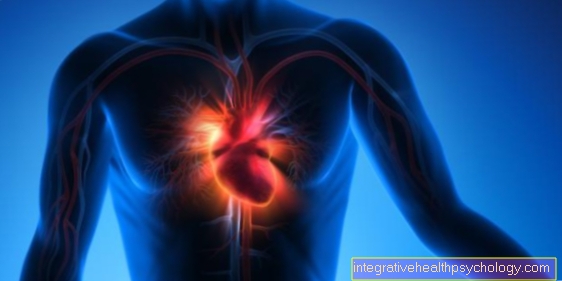
The cardiovascular system consists of the small and large circulation, which are connected in series. They are connected through the heart. The large body circulation supplies the body with nutrients. The small circulation leads through the lungs to

Mitral valve

Mitral valve

The mitral valve or bicuspid valve is one of the four heart valves and is located between the left ventricle and the left atrium. The mitral valve is a leaflet valve with two leaflets. Mitral valve stenosis is one of the diseases

Left ventricle

Left ventricle

The left ventricle is part of the "large" or body circulation downstream of the left atrium (atrium sinistrum) and pumps the oxygen-rich blood freshly coming from the lungs via the aorta into the body circulation, where it contains all important structures

The aorta

The aorta

The aorta is the main artery in humans, it is a large, elastic vessel. The heart ejects oxygen-enriched blood directly into the aorta, from where the vascular tree further divides, transporting blood to all parts of the body.

Right atrial

Right atrial

The right atrium is one of the four interior spaces of the heart that is included in the great circulation. The blood flows into it via the vena cava and is forwarded to the right ventricle. It also includes the sinus node and the AV node as

Gastric mucosa

Gastric mucosa

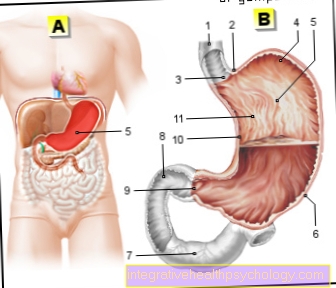
The gastric mucosa lines the stomach from the inside and secretes various metabolites such as hydrochloric acid, bicarbonate, intrinsic factor, hormones and enzymes.The liquid ensures that the food is soaked and mixed with the metabolites

Pericardium

Pericardium

The pericardium consists of connective tissue, surrounds the heart protectively and thus prevents the heart from expanding excessively. It consists of two layers, one lies directly on the heart and the other is slipped over this layer to allow displacement movements

appendix

appendix

The appendix (cecum) is part of the large intestine and joins the small intestine. It forms the starting part of the appendix, so to speak. The appendix includes what is known as the appendix vermiformis. That's also the real part of a

Mother bands

Mother bands

The connective tissue, cord-like structures that surround the uterus on all sides and stabilize it in the pelvis are called uterine ligaments. During pregnancy, the ligaments must stretch with the uterus, which is often painful