Category : Anatomy-Lexicon

Frontal sinus (sinus frontalis)

Frontal sinus (sinus frontalis)

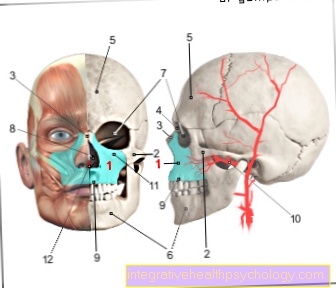
The frontal sinus belongs to the paranasal sinuses with the maxillary sinus, the sphenoid sinus and the ethmoid cells. It represents an air-filled cavity in the bone that forms the forehead and, like the other parts of the paranasal sinuses, can also develop

Dentine

Dentine

- your dental information portal. Here you will find information on the subject of dentin explained to laymen.

Nasal septum

Nasal septum

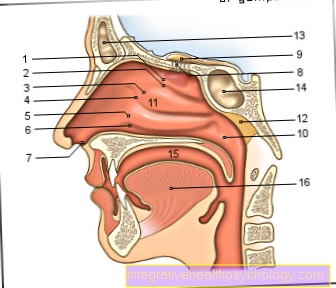
The nasal septum forms the border between the right and left nasal main cavity. It also forms part of the externally visible shape of the nose.

Tooth root

Tooth root

The tooth root secures the tooth in the jaw. It consists of dentine. The tooth neck is the upper part of the tooth root and is not protected by tooth enamel like the tooth crown, but is surrounded by less protective gums. For this reason comes

jaw

jaw

the medical information portal. Here you will find information on the subject of pine that is understandable for laypeople.

Wisdom tooth

Wisdom tooth

The wisdom teeth are the last molars. They are not applied to everyone, but this does not mean any functional restriction, on the contrary - wisdom teeth often cause pain because the jaw is usually too small for them and they

Maxillary sinus

Maxillary sinus

The maxillary sinus is a paired cavity in the upper jaw above the upper row of teeth. Inflammation of the maxillary sinus can start either from the nose or from the teeth. Antibiotics are administered therapeutically or, in severe cases, they are given

Gums

Gums

The gums are part of the tooth holding apparatus and form pits into which the teeth are set or from which they grow. Between the teeth and the gums there is a groove about 2mm apart, in which bacteria can be found

Mouth breathing

Mouth breathing

Mouth breathing is the form of breathing in which the air is inhaled through the mouth instead of the nose. This breathing technique is increasingly used in sports. But it also has certain disadvantages compared to mouth breathing.

Sinuses

Sinuses

The paranasal sinuses include the paired maxillary sinuses, the frontal sinus, the paired ethmoid sinuses with their ethmoid cells and the sphenoid sinuses. The paranasal sinuses usually become conscious when they become inflamed and become one

Sphenoid sinus

Sphenoid sinus

The sphenoid sinuses are paired, pre-formed cavities in the skull of every person and count to the paranasal sinuses. Inflammation of the sphenoid sinuses can manifest itself with a feeling of pressure over the nose and forehead, fever and runny nose. Strengthen often

Action potential

Action potential

In the case of an action potential, the membrane potential of a cell is changed to such an extent that electrical excitation can be passed on, thus enabling stimulus transmission. This works through the inflow and outflow of different ions

Nerve cell

Nerve cell

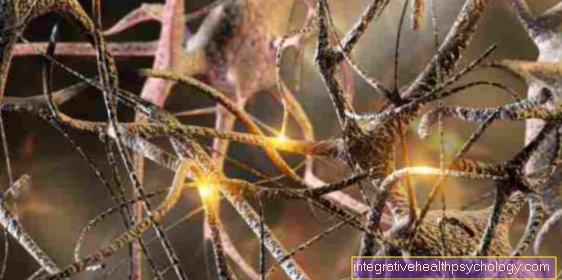
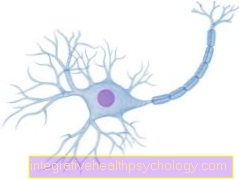
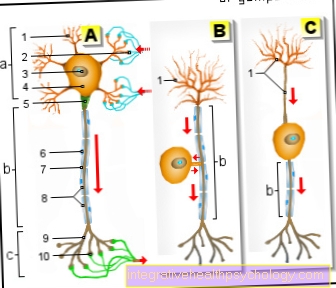
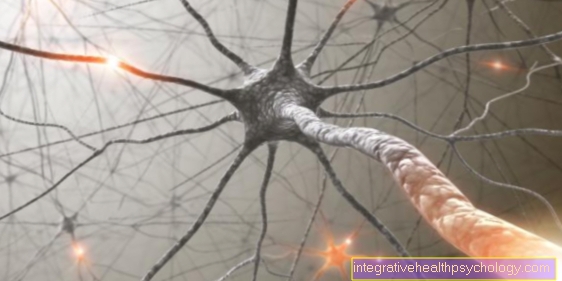
The smallest central functional element of the nervous system is called a nerve cell (neuron). It is made up of a body and processes (axon and dendrites) and is important for the generation and / or transmission of information. About synapses

upper jaw

upper jaw

The human upper jaw is firmly ossified to the skull. The front edge of the body of the upper jaw is the face, the rear edge the lateral temple surface and from above it delimits the eye socket. Maxillary sinus infections are common

Motor neuron

Motor neuron

Motor neurons are the nerve cells that are responsible for the creation and coordination of movements. According to the localization of the motor neurons, a distinction is made between the “upper motor neurons”, which are located in the cerebral cortex, and the “lower ones

Nasal mucosa

Nasal mucosa

The nasal mucous membrane is a thin layer that lines our nasal cavities from the inside and consists of cilia. The main functions of our nasal mucosa are smelling and breathing as well as the preparation of the air we breathe through purification, adults

Axon

Axon

An axon is the extension of a nerve cell, which transmits impulses from the nerve cell body into the distance. So that the transmission can take place as quickly as possible, some axons are covered by an insulating myelin layer

Myelin sheath

Myelin sheath

Myelin sheaths are fatty substances that wrap nerve cells and are responsible for better transmission. They work like an insulation cable and prevent signals from having to be generated again and again. At their destruction

Motorized end plate

Motorized end plate

The motor endplate is a synapse and transmits electrical excitation from a nerve fiber to a muscle fiber. This process is called electromechanical coupling, as an electrical signal results in a mechanical reaction, contraction

Synaptic cleft

Synaptic cleft

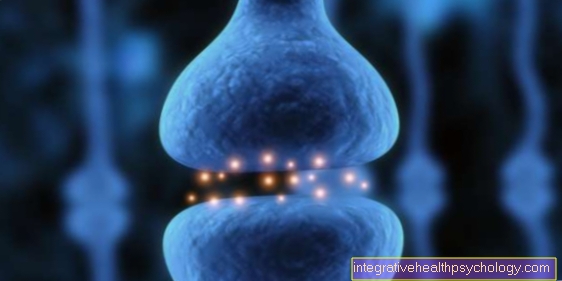
The chemical transmission of stimuli from a nerve cell to its target cell takes place at a synaptic gap. This releases messenger substances that are absorbed on the other side. At this point, many pharmaceuticals and drugs do that