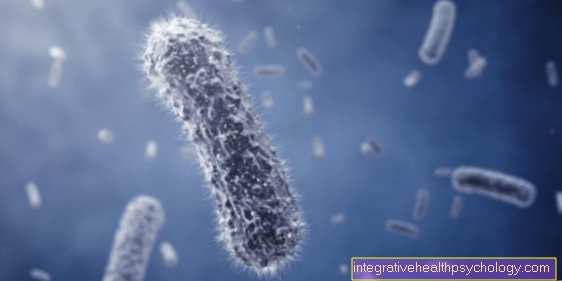
MRSA
the medical information portal. Here you will find information on the subject of MRSA explained to laypersons.

the medical information portal. Here you will find information on the subject of MRSA explained to laypersons.
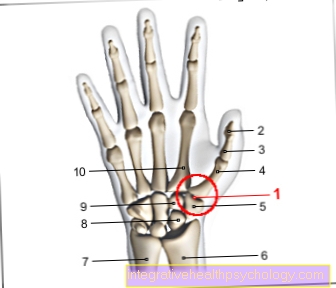
The thumb saddle joint is the joint between the large polygonal bone and the first metacarpal bone. Due to its saddle-shaped joint surfaces, it can move in two axes and it has freedom of movement similar to a ball joint. It is
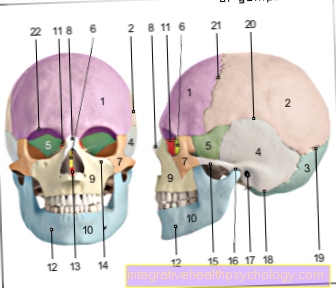
The head is connected to the rest of the body via the neck and contains all human sensory organs: the eyes, nose, mouth, ears on the face and the ears on the sides. In addition, the skull protects the brain, i.e. most of the central one
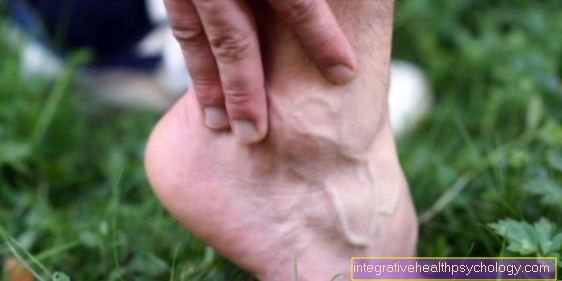
The ankle is a functional unit, with the upper and lower ankle joints being the two largest joints and being supported by many smaller joints in the metatarsal bones. Strong ligaments provide not only a strong hold, but also restrict movement
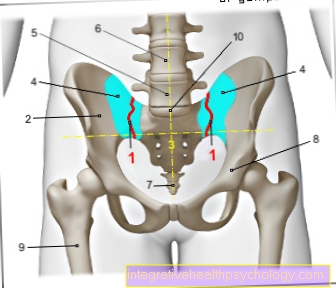
The SIJ, also known as the sacroiliac joint, is an articulated connection between the sacrum (os sacrum) and the iliac bone (os ilium). It is stabilized by one of several ligaments and therefore cannot move very well. Vertebral blockades often occur
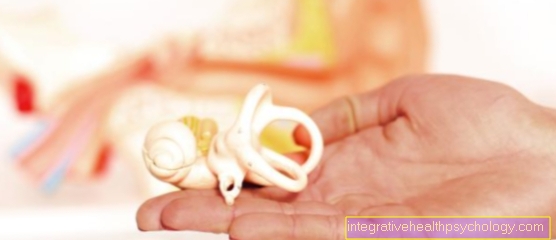
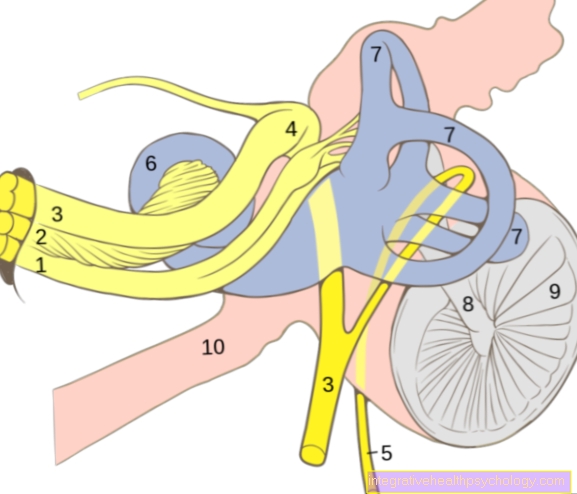
The human organ of equilibrium or vestibular is located in the inner ear. It is used to measure linear and rotational acceleration. The organ of equilibrium can be checked for functionality in various ways. In the event of malfunctions
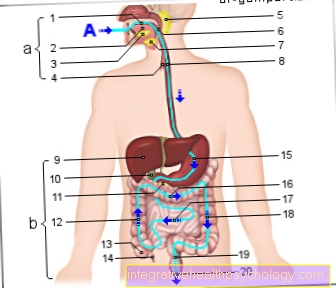
The intestine is divided into different sections. The small intestine, which is made up of the duodenum, the jejunum and the ileum, connects to the stomach. The main task of these sections of the small intestine is the absorption of nutrients. The colon
The vestibular nerve is the equilibrium nerve and is counted among the cranial nerves. It is one of the two parts of the vestibulochochlear nerve, which also includes the auditory nerve. The nerve is responsible for relaying balance information
The blood pressure is too low if it reaches values below 105/60 mmHg. There are various reasons for this: On the one hand, it can be depressed due to predisposition, on the other hand it can also indicate a circulatory weakness, although it can happen when getting up quickly
Cerebellar atrophy is a shrinkage of tissue in the cerebellum. The causes for this can for example be genetic or caused by alcohol. Cerebellar atrophy manifests itself very differently, depending on which one
The sense of balance is used for orientation and the determination of posture in space. Various sensory organs are necessary for this. This includes the organ of equilibrium (vestibular organ), the eyes and reflexes, as well as the interconnection of all
Balance in the sense of the ability to balance is defined as the ability to keep the body and or part of the body in balance, or to bring it back into balance during movements. Our balance organ measures to make this possible
The blood pressure is too low if it reaches values below 100/60 mmHg. Mostly women are affected and the most important symptoms include dizziness, weakness, fatigue, shortness of breath or fainting, which are due to insufficient blood supply to the brain
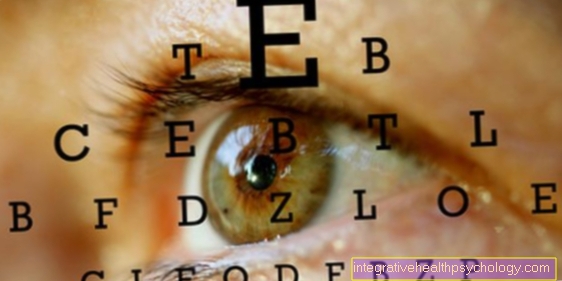
the information portal for ophthalmology. What visual acuity means, clearly explained.
the medical information portal. Detailed information on the subject of varicella zoster virus explained in an understandable way.
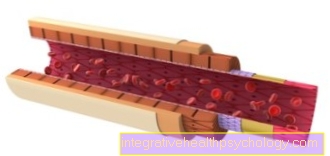
The endothelium is a group of cells that lines blood vessels. It is a flat, single-layer association of cells, which coordinate important metabolites for controlling blood pressure and blood clotting and thus important tasks in the organism
The choroid is the back part of the vascular skin of the eye and is embedded between the retina and the dermis as a middle layer. It also includes the iris and the ciliary body. The choroid serves with its network of blood vessels
A complicated system, consisting of internal and external eye muscles, is responsible for the movements of our eyeball. Innervation and blood supply also play a major role. Injuries to the nerves, inflammation and tumors can lead to various
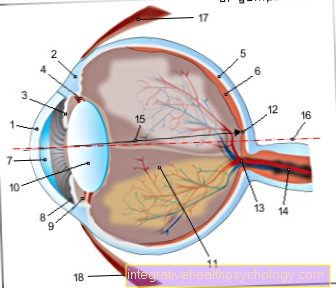
The eye is made up of the eyeball and surrounding structures such as the eyelids and tear organs. The outer skin of the eye is made up of leather and cornea. The middle skin of the eye includes the iris, the ciliary body and the choroid. The
The conjunctiva, as a mucous membrane, lies against part of the eyeball from the outside and the eyelids from the inside. Typical symptoms of conjunctivitis are burning, itching and redness, but secretion is also part of it. In the case of a bacterial pathogen



.jpg)