callus
Callus formation occurs as the fracture heals. New, soft bone tissue is created, which is then converted into normal bone tissue in the further course.

Callus formation occurs as the fracture heals. New, soft bone tissue is created, which is then converted into normal bone tissue in the further course.
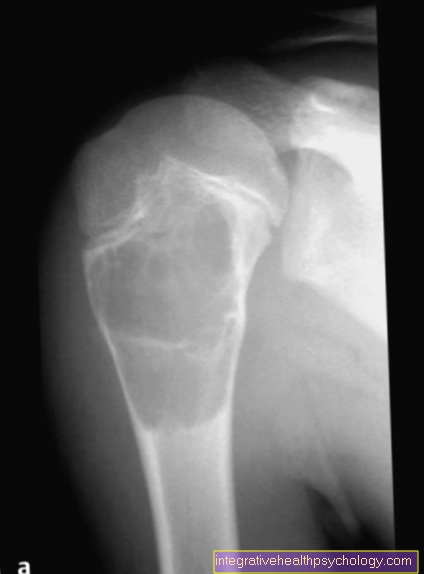
The aneurysmal bone cyst is a benign bone tumor. The blood-filled cyst located in the bone is divided into several individual cavities by septa. Usually the change is symptom-free, but it can
The two-headed thigh muscle lies on the back of the thigh and belongs to the flexor group. The function of the biceps femoris, two-headed thigh muscle, consists of flexing and external rotation of the lower leg in the knee joint and one
A bone cyst is a fluid-filled cavity in the bone. A distinction is made between a simple (juvenile) and aneurysmal bone cyst. The clinical picture of the juvenile bone cyst occurs mainly in children and adolescents
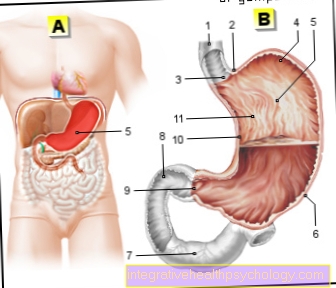
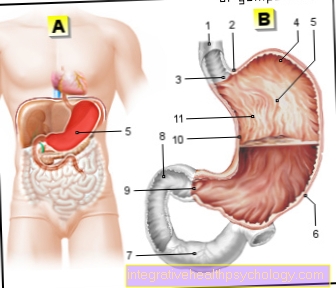
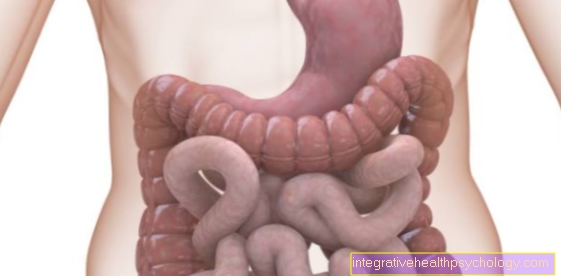
The human digestive tract consists of various organs and is responsible for the uptake, digestion and utilization of food and fluids. It is mostly divided into the upper and lower digestive tract and also as the gastrointestinal tract
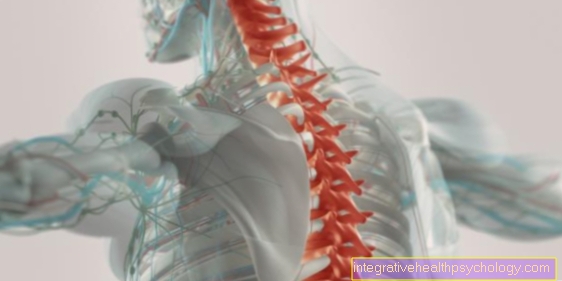
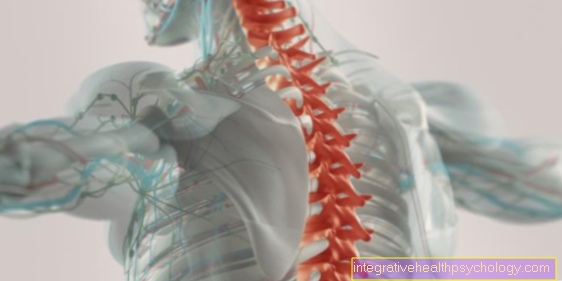
The thoracic spine is part of the spine as a whole, also known as the backbone. There are 12 thoracic vertebrae (Vertebrae thoracicae), which make up the middle part of the spine and with the ribs (Costae) and the breastbone (Sternum) the thorax
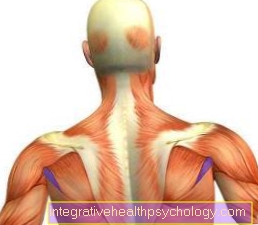
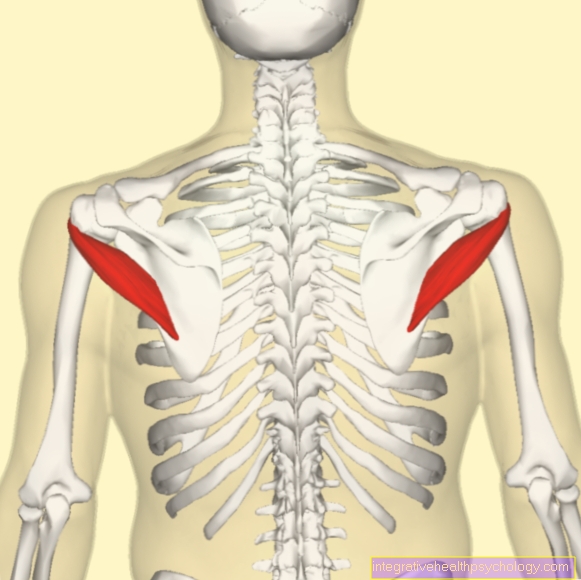
The small round muscle (M. teres minor) runs between the outer surface of the shoulder blade and the humerus and is responsible for adduction and external rotation of the upper arm.
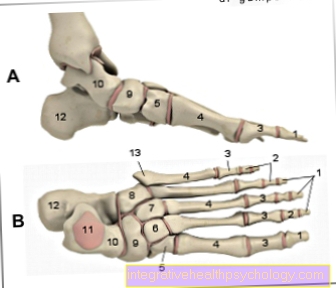
The metatarsus consists of five metatarsal bones, which form various articulated connections to the adjacent bones. The metatarsus is used to adapt the foot to uneven ground and to maintain mobility. Common illnesses are
The iliotibial band is a layer of connective tissue that reinforces the fascia lata on the side of the thigh. It is therefore responsible for tensioning the thigh, i.e. for stabilizing the thighbone against lateral bending
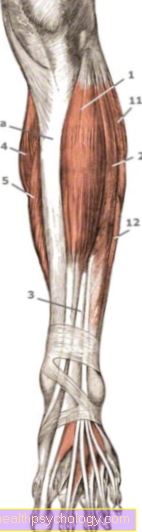
The anterior tibial muscle (M. tibialis anterior) is the antagonist to the M. gastrocnemius and flexes the foot in the ankle.
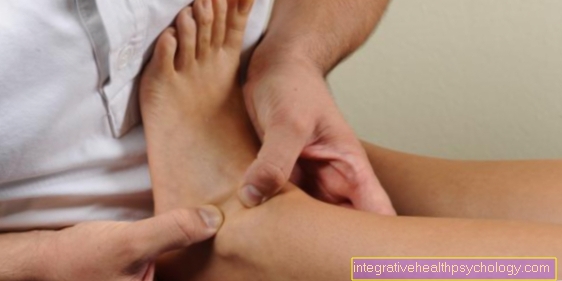
The outer ligament on the foot actually consists of three ligaments, all of which originate from the outer ankle. The so-called anterior talofibular ligament is the thinnest ligament and therefore more frequently affected by ligament tears. To a torn or stretched ligament
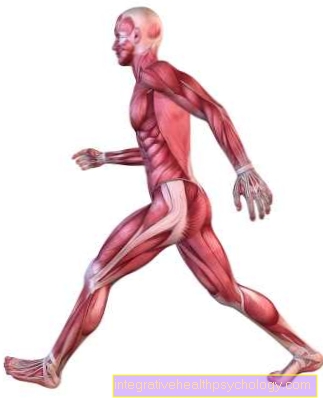
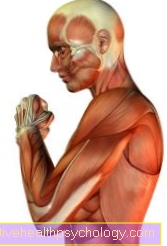
A healthy person has 656 muscles that perform different tasks on the extremities. A pair of muscles, i.e. an agonist and an antagonist, perform movements in opposite directions - such as flexion and extension. So you will too
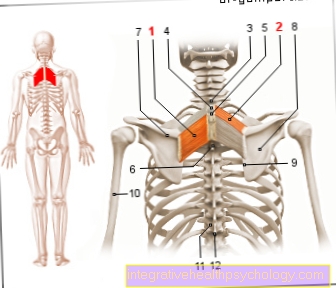
The rhomboid muscle (M. rhomboideus major and minor) runs from the spinous processes of the cervical and thoracic vertebrae to the inner shoulder blade margin. It is completely covered by the trapezius muscle and its main function is to stabilize the shoulder blade
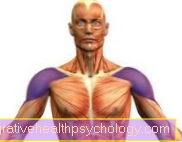
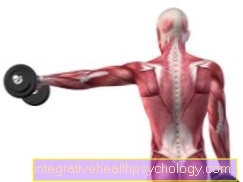
The deltoid muscle is similar in shape to the inverted Greek delta, which is how it gets its name. The deltoid muscle (Musculus deltoideus) becomes the most important lifter of the arm through the middle section coming from the shoulder blade.
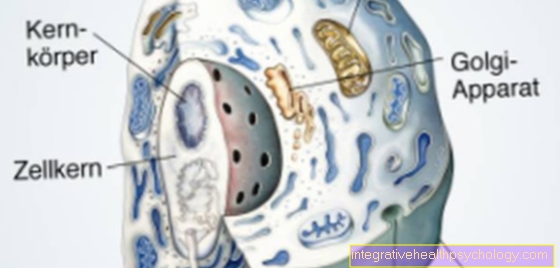
The cell nucleus or nucleus is the largest organelle in a cell and is located in the middle of the cytoplasm. It is surrounded by two shells and contains the cell's genetic information. This is important for making proteins for the body.
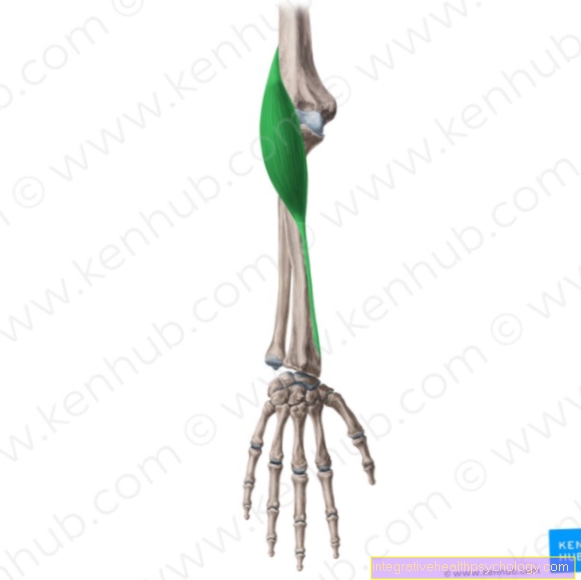
The upper arm spoke muscle (musculus brachioradialis) is a powerful flexor of the elbow joint. Its slim muscle belly runs along the middle of the forearm and forms the anatomical boundary between the flexor and extensor muscles of the forearm
A collagenase is an enzyme that is able to break down collagen. It breaks bonds between two amino acids. One of these amino acids is always proline, while the second can vary.
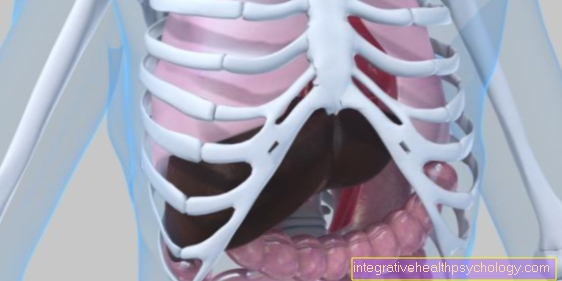
The costal arch is the cartilaginous connecting piece between the sternum and the ribs 8 to 10, which are too short to interact directly with the sternum. The costal arch therefore limits the chest from the front and below. As a result of bruises k
The hood muscle (M. trapezius) is a superficial muscle that extends over the back between the two shoulders, the neck and the 12th thoracic vertebra. Divided into three main parts, it can perform different functions, e.g.
The large round muscle (M. teres major) is one of the rear shoulder muscles. It connects the humerus with the lower part of the shoulder blade and, when contracting, raises the upper arm behind the body or pulls the raised arm back to the K




.jpg)