Tibialis posterior muscle
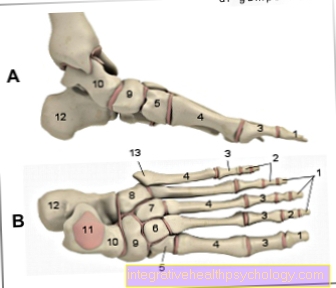
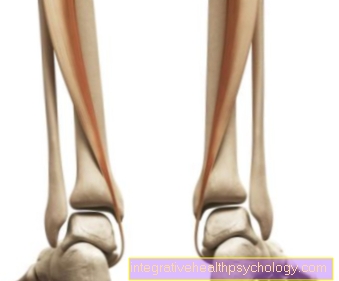
The tibialis posterior muscle is a skeletal muscle that lies in the area of the calf and extends with its tendon around the inner ankle to the sole of the foot.

The tibialis posterior muscle is a skeletal muscle that lies in the area of the calf and extends with its tendon around the inner ankle to the sole of the foot.
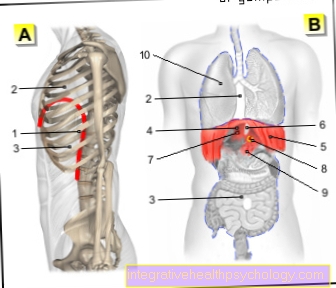
The diaphragm is arterially supplied by two upper and two lower diaphragmatic arteries (Arteriae phrenicae superiores / inferiores), the cardiac diaphragmatic artery (Arteria pericardiacophrenica) and the diaphragmatic muscle artery (Arteria musculophrenica), the
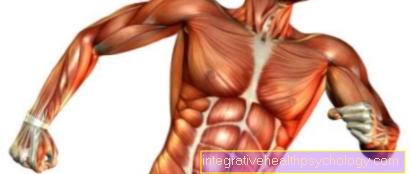
The serratus anterior muscle arises on the 1st - 9th rib and attaches to the inside of the shoulder blade. Its function is to move the shoulder blade to the side and front. It forms the side wall of the armpit.
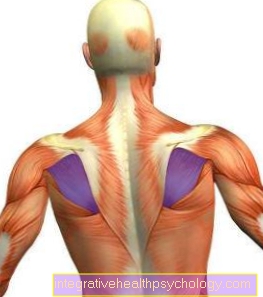
The lower bone muscle (M. infraspinatus) arises in the scapula and attaches to the humerus. It belongs to the rotator cuff muscle group and is mainly responsible for the external rotation of the upper arm.
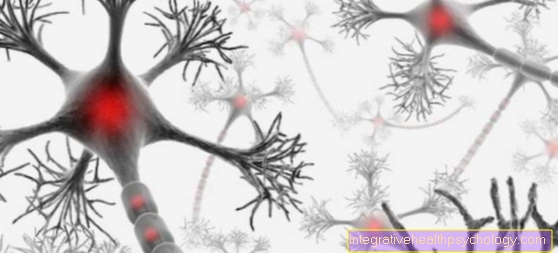
A ganglion is a collection of cell bodies from different nerve cells. It mainly serves as a switching station and is presented in the form of a thickening of the nerve cord. Even small pieces of information can be processed close to the organ. At
Anatomy, course and innervation of the long thoracic nerve and what happens in the event of damage.
The drop hand is a weakness in the extensor muscles of the fingers and hand that results from damage to the radial nerve. This can happen if the pressure is too long, but also if the upper arm breaks or the shoulder is dislocated
A clawed hand damages the ulnar nerve. The base joints of the fingers are hyperextended, the middle and end joints are bent. This is most clearly visible on the ring and little fingers.
The pudendal nerve is a plexus of nerves that arises at the level of the sacrum. It runs through the pelvis to the genital region, which is innervated by motor and sensitivity. Pudendal nerve damage is most noticeable in one
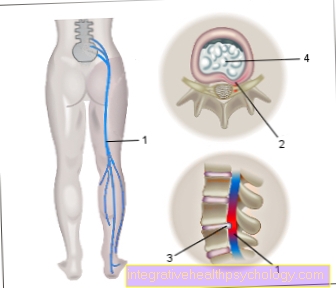
The sciatic nerve emerges from the spinal cord between the lumbar and sacral spine and moves towards the legs and buttocks, which are supplied by it. If the nerve is damaged, it usually leads to severe pain in the leg, which is either stabbing or dull
A vein is a blood vessel that carries blood to the heart. In the body's large circulation, oxygen-poor blood flows through the vein, whereas in the lungs, oxygen-rich blood always flows from the lungs to the heart. Veins are very elastic and can be
The peroneal nerve, also called the fibular nerve, emerges from the sciatic nerve with the tibial nerve and supplies the fibula. Damage can lead to pain in the hollow of the knee, the outer lower leg and the foot, as well as numbness or
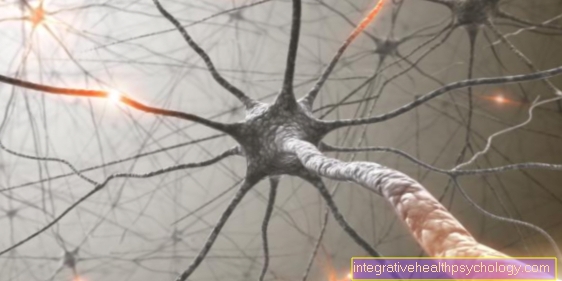
The axon hill is the place in the nerve cell where the inhibitory and excitatory signals that reach the cell via dendrites are processed. The summed signal is then passed on via the axon originating on the axon hillock.
Denervation is the complete or partial interruption of nerve tracts between an organ and the brain. Denervation can be used either specifically to combat chronic pain, for example, or as undesirable
The tibialis-posterior reflex is a muscle reflex that is interconnected via segments L5 to S1 and leads to an elevation of the inner edge of the foot (supination).
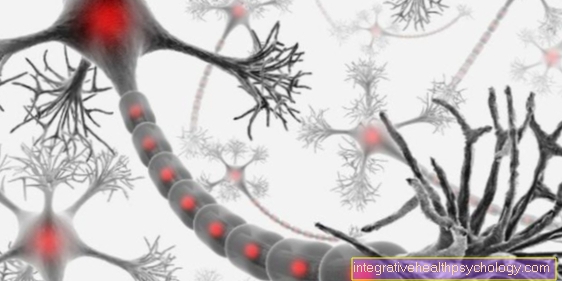
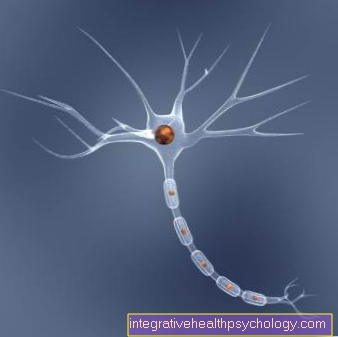
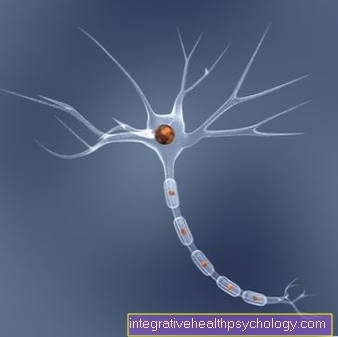
A neurite is responsible for the transmission of electrical impulses in a nerve cell. The cell process is often isolated by what is known as a myelin sheath, which enables rapid transmission. If this insulation breaks
A Ranvier ring is created by interrupting the myelin sheaths on nerve fibers and is used to increase the speed of nerve conduction. Here the action potentials "jump" from one Ranvier ring to the next, which is called saltatory
Reflexes are uncontrollable, fast and always the same reactions to certain stimuli. Reflexes are mediated by our nervous system, consisting of nerve fibers that are connected to one another via so-called synapses.
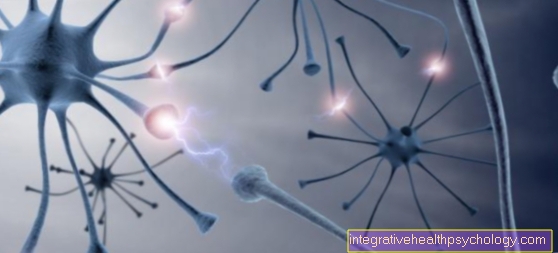
A synapse is the place where the signal transmission from a nerve cell to its target cell takes place. When the electrical signal arrives at the synapse, the information is transmitted via messenger substances into the synaptic cleft and absorbed by the target cell. Poisons
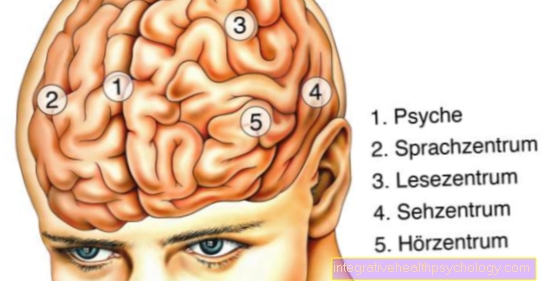
The main language centers are the motor language center (Broca area) and the sensory language center (Wernicke area) in the cerebrum. In addition, numerous other areas play an important role in the complex processes of speech understanding