Category : Anatomy-Lexicon

Intermediate transverse process muscle

Intermediate transverse process muscle

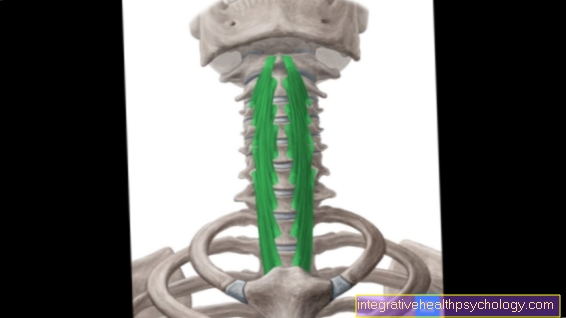
The intermediate transverse process muscles (M. intertransversarii) belong to the autochthonous back muscles and connect the transverse processes of the vertebral bodies on both sides. Their function is to bend the spine to the respective side.
External oblique muscle of the abdomen

External oblique muscle of the abdomen

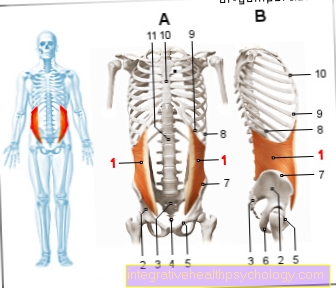
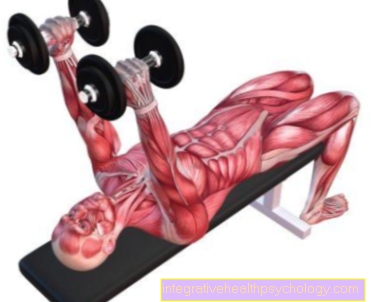
The external oblique abdominal muscle (Musculus obliquus externus abdominis) is the largest and most superficial abdominal muscle in humans. Its function consists in tilting the axial skeleton, which can be trained very well with side push-ups.

Testicle lifter

Testicle lifter

The testicle lifter (M. Cremaster) consists of muscle fibers from the abdominal muscles.The muscle fibers follow the spermatic cord and attach to the testicular cover. The name corresponds to the function: The testicle lifter pulls the testicle closer to the abdominal wall like a protective reflex

Internal oblique muscle

Internal oblique muscle

The internal oblique abdominal muscle (Musculus obliquus internus abdominis) stabilizes the trunk when lifting and carrying heavy loads. Training of the inner oblique abdominal muscle is carried out, as with the outer oblique abdominal muscle, by means of lateral exercises

Tailor muscle

Tailor muscle

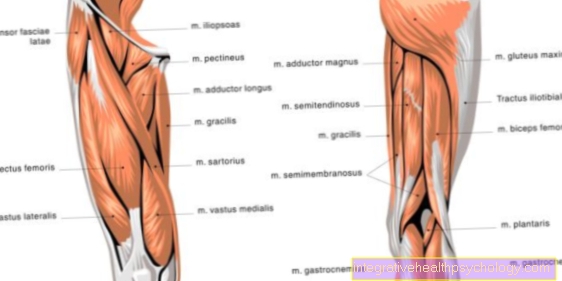
The tailor's muscle (Musculus sartorius) belongs to the anterior thigh muscles. The tailor's muscle causes flexion and external rotation in the hip joint. In strength training, the tailor's muscle is not trained separately, but develops

Inter-spinous process muscle

Inter-spinous process muscle

The inter-spinous process muscles (Musculi interspinales) connect the spinous processes of the vertebral bodies to one another on the cervical and lumbar spine. They belong to the autochthonous back muscles and their function is to straighten and stabilize the

Two-headed hamstrings

Two-headed hamstrings

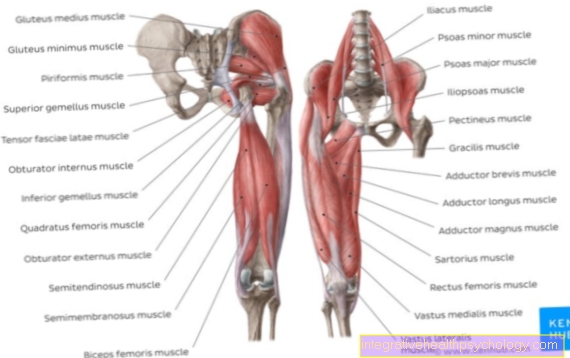
The two-headed thigh muscle (M. biceps femoris) arises on the rear thigh and rear pelvic bones and attaches to the inside of the lower leg and is one of the most important flexors in the knee joint.

Half tendon muscle (M. semitendinosus)

Half tendon muscle (M. semitendinosus)

The half-tendon muscle (M. semitendinosus) belongs to the rear thigh muscles and extends from the ischial tuberosity to the inside of the knee joint, where it attaches to the shin. He stretches in the hip joint and bends in the knee joint.

Long adductor muscle (M. adductor longus)

Long adductor muscle (M. adductor longus)

The long adductor muscle (M. adductor longus) belongs to the adductor group and runs from the pubic bone to the thigh bone. Its functions include adduction, flexion and external rotation in the hip joint. Because of its location, it is often torn from hamstring

Comb muscle (M. pectineus)

Comb muscle (M. pectineus)

The comb muscle (M. pectineus) connects the pubic bone with the thigh bone and belongs to the adductor group of the thigh. Its functions include flexion, external rotation and adduction of the thigh. In athletes it is often of

Short adductor muscle (M. adductor brevis)

Short adductor muscle (M. adductor brevis)

The short adductor muscle (M. adductor brevis) belongs to the adductor group of the thigh and brings the thigh closer to the body. He can often be affected by the torn muscle fiber.

Semi-membranous muscle (M. semimembranosus)

Semi-membranous muscle (M. semimembranosus)

The semi-membranous muscle (M. Semimembranosus) belongs to the ischiocrural muscles and lies on the back of the thigh. Its functions include flexion in the knee joint and extension in the hip joint.

Pubic mound

Pubic mound

Your anatomical information portal. A lot of helpful information about pubic mounds described in an understandable way.

Clod muscle

Clod muscle

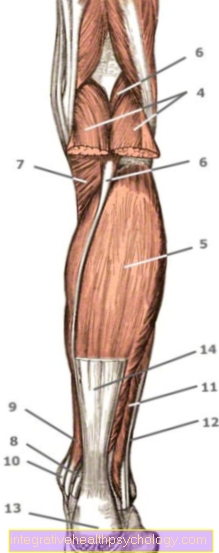
The soleus muscle (M. soleus) lies on the back of the lower leg and is completely covered by the twin muscle, with which it also forms a functional unit. He is responsible for the flexion (plantar flexion) of the foot and translates

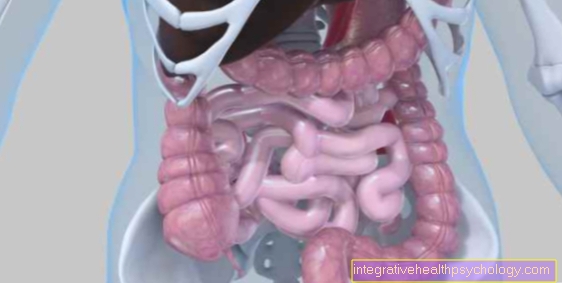
Abdomen

Abdomen

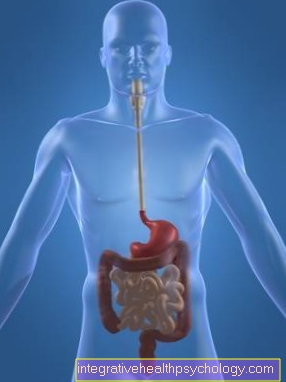
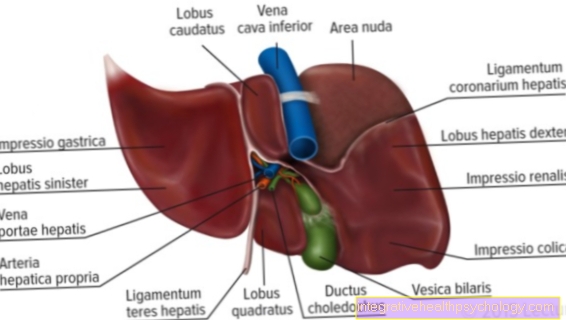
The abdominal cavity, also known as the abdominal cavity, begins below the diaphragm and extends to the level of the iliac crest. In this area there are several organs of the digestive tract and immune system such as the liver and the gastrointestinal tract

Task of enzymes in the human body

Task of enzymes in the human body

- your internal information portal. Here you will find information on the subject of the role of enzymes in the human body, clearly explained to laymen.

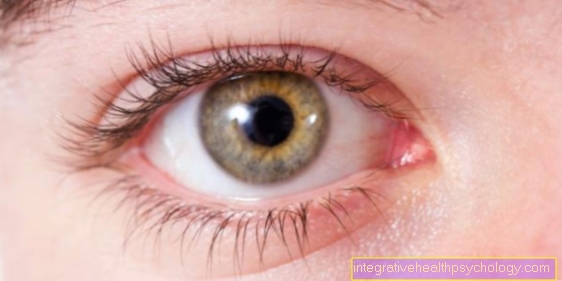
Sebum on the eye

Sebum on the eye

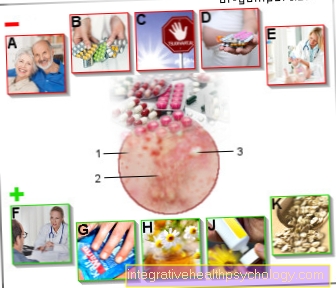
The sebum glands belong to the appendages of the skin. They serve to produce and excrete a secretion, the so-called sebum.

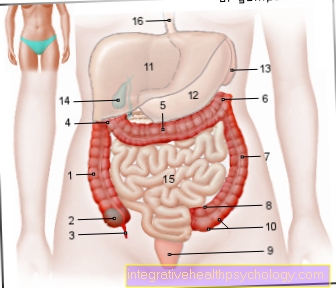
Colon

Colon

The colon makes up most of the large intestine. It lies between the appendix and rectum / rectum and is responsible for drawing water out so that the stool can thicken. Chronic inflammatory diseases such as Crohn's disease or colitis

Vascular supply of the intestine

Vascular supply of the intestine

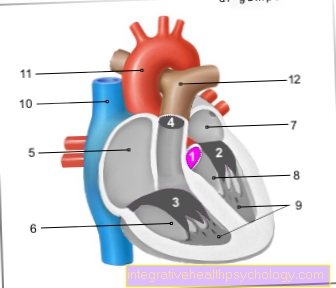
The blood supply to the individual intestinal sections is mainly ensured by the branches of the abdominal aorta, the portal vein and the inferior vena cava. The arterial blood supplies the organs with oxygen and the venous blood transports the im

Dermis of the eye

Dermis of the eye

Leather skin (lat: sclera) - the main part of the outer skin of the eye, which consists of firm connective tissue and gives the entire eyeball its shape. You can find more about anatomy, functions and diseases of the dermis and much more in this topic.