Long thigh tightener
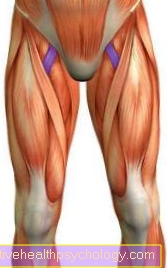
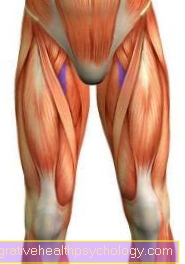
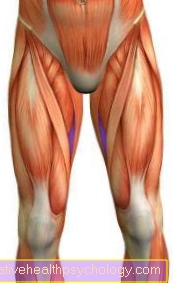
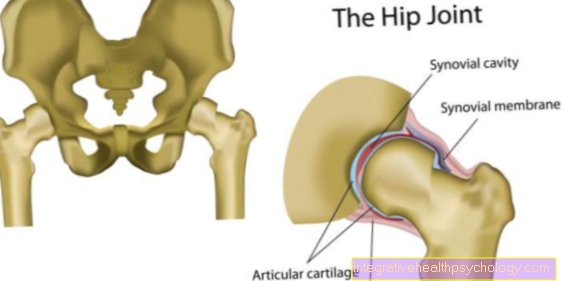
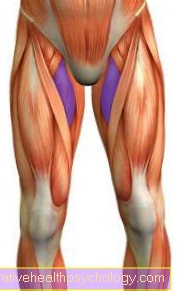
The long thigh puller follows the pectineus muscle in the superficial layer of the thigh adductors. The function of the long thigh tightener is an adduction in the hip joint.

The long thigh puller follows the pectineus muscle in the superficial layer of the thigh adductors. The function of the long thigh tightener is an adduction in the hip joint.
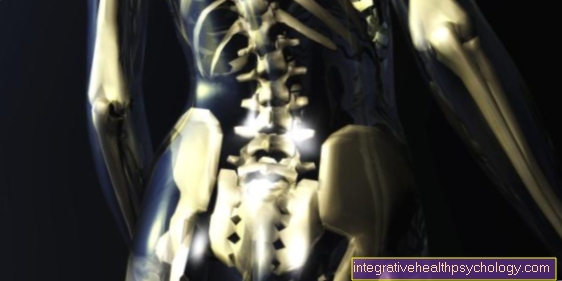
The ischium (ischium) is part of the pelvis and, together with the pubic and iliac bones, forms the hip bone. The ischium consists of a body and an upper and lower ischial branch. It serves to stabilize the pelvic ring and as an attachment and
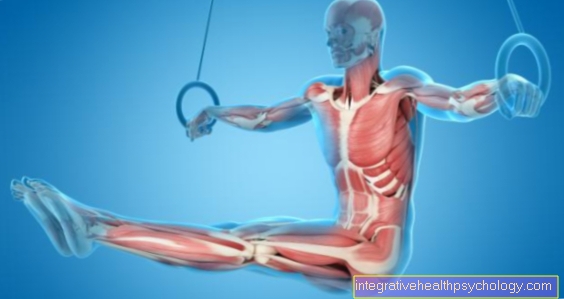
Our body has around 650 muscles, without whose existence humans would not be able to move. Each of our movements requires an activity of certain muscles. Scientific research shows that the eye muscles work alone
Joints are basically the connection of two bones, whereby this connection can be movable, then it is a real joint, or immobile (e.g. the connection of two vertebral bodies by intervertebral discs), then it is
The humerus connects the shoulder joint with the elbow joint and thus with the forearm. At the shoulder joint, the humerus and the shoulder blade (scapula) form a so-called ball joint. At the elbow joint, the humerus forms with the
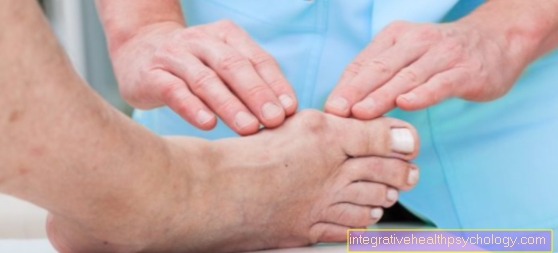
The metatarsophalangeal joint of the big toe is the articulated connection between the metatarsal bone and the terminal phalanx of the respective toe. It allows two directions of movement and is restricted by tight ligaments. Often the first metatarsophalangeal joint of the big toe is part of a
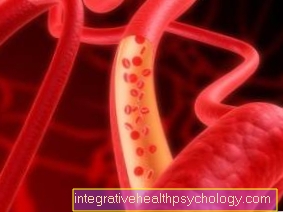
The artery is the blood vessel that carries blood away from the heart. An artery usually carries oxygen-rich blood. The only exception is the pulmonary circulation. Arteries change their microscopic structure depending on their diameter and position in the body
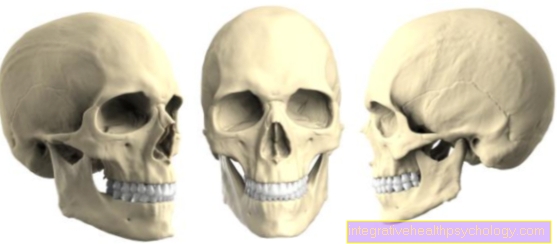
The human skull consists of many bones, which, however, are firmly fused together through the bone sutures. In newborns, the head still feels soft in certain places because the bone seams are not yet fully formed
The pectineus muscle is located on the inside of the thigh and consists of a four-sided, long muscle plate. The pectineus muscle is trained in weight training with the adductor machine.
The short thigh puller (musculus adductor brevis) lies below the comb muscle and the long thigh puller. The function of the short thigh tightener is an adduction in the hip joint.
The great thigh puller (Musculus adductor magnus) is the largest, strongest and deepest muscle of all adductors in the thigh. The large thigh tightener also takes over most of the adduction in the hip joint.
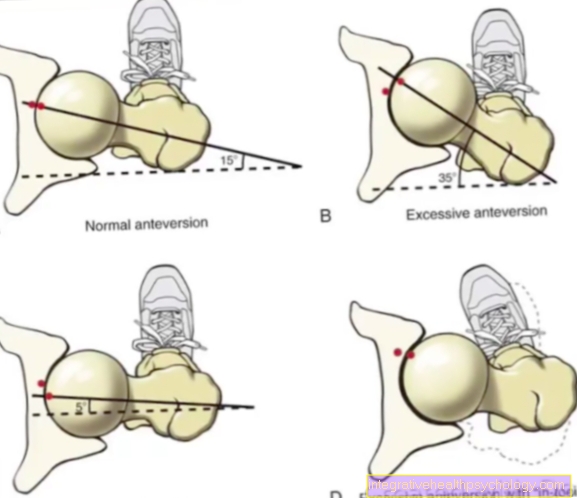
The retroversion describes the lifting of the extremities backwards. The countermovement is the anteversion, whereby the extremity is raised in front of the body.
The foot muscles are divided into the muscles of the back of the foot (dorsum pedis) and the sole of the foot (planta pedis). They enable the foot to move in different ways and are also involved in its stabilization.
Pain in the fibula is defined as an uncomfortable, annoying, sometimes stabbing or pulling sensation. The fibula is located on the outside of both lower legs. The causes of fibula pain can be multiple
The Achilles heel (tuber calcanei) forms the rear part of the heel bone (calcaneus). The name Achilles heel originally comes from Greek mythology. The calcaneus is the largest tarsal bone and forms together with the talus
Humans have 14 toe bones on each foot, which are connected to one another by joints. In addition, numerous muscles and nerves as well as blood supply are of great importance. Toe deformities are congenital or acquired deformities
The tibialis posterior muscle is a skeletal muscle that lies in the area of the calf and extends with its tendon around the inner ankle to the sole of the foot.
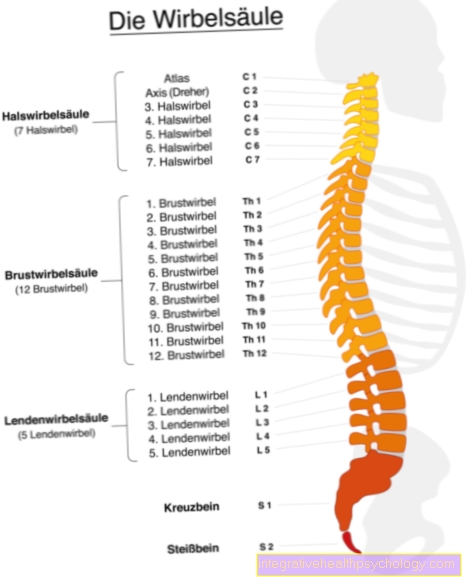
The spine consists of 24 vertebrae, which in turn consist of a vertebral body and a vertebral arch. On the one hand, the vertebral bodies support the entire skeleton, but they also protect the spinal cord.The vertebral bodies can experience pain and restriction
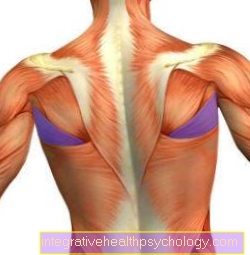
The large round muscle (M. teres major) arises on the back of the shoulder blade and attaches to the front of the upper arm. It is in the upper arm for internal rotation, adduction from the raised position and retroversion (raising the arm
The tailbone is a slightly forward arched section of the spine made up of two to four fused coccyx vertebrae. This is the lowest section of the spine, the one above the cartilaginous sacrococcygeal joint