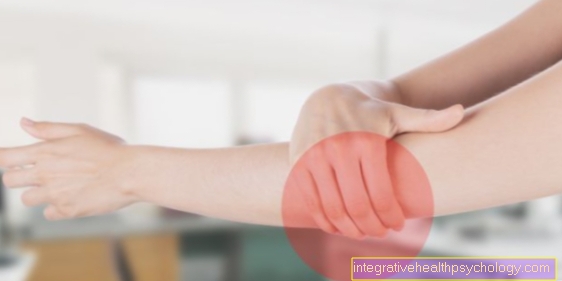
The elbow joint
The elbow joint connects the upper arm and forearm and enables movement in two degrees of freedom. The three bones of the upper arm, ulna and radius form three partial joints. These partial joints are with a common joint capsule for

The elbow joint connects the upper arm and forearm and enables movement in two degrees of freedom. The three bones of the upper arm, ulna and radius form three partial joints. These partial joints are with a common joint capsule for
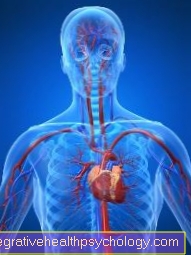
Bacteria can get into the blood through open wounds. Some bacteria are harmless and not noticeable at all, but there are also dangerous bacteria that can cause life-threatening blood poisoning or other inflammatory diseases of various kinds
The lymphatic organs include the organs in which the lymphocytes, the main actors of the immune system, reside. The primary lymphatic organs are the bone marrow and the thymus, where the lymphocytes are formed and shaped. Second
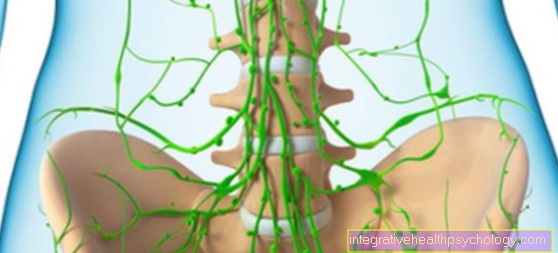
The lymph vessels run through the whole body and transport the lymph, i.e. tissue fluid, back to the blood vessels. The intermediate lymph nodes filter the lymph by eliminating pathogens. The lymph nodes
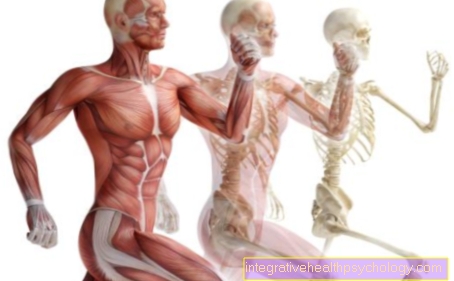
Striated muscles or skeletal muscles are the muscles of the body that can be controlled at will, such as the muscles of the legs. Due to their microscopic structure, the muscle fibers look striped. The skeletal muscles over a
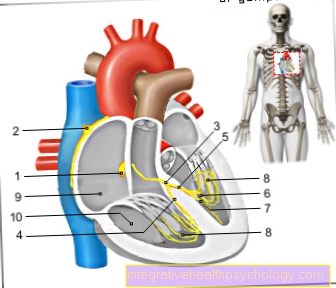
The AV node (nodulus atrioventricularis) lies below the sinus node in Koch’s triangle. It consists of specialized heart muscle cells that generate an electrical signal that causes the heart to contract. If the sinus node fails, it takes over
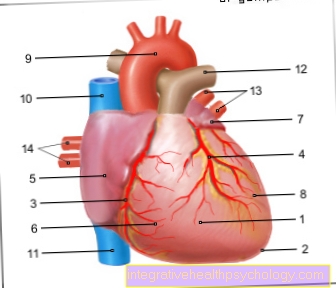
The outermost layer of the heart wall is the epicardium (outer skin of the heart). It produces the fluid between the heart and the surrounding pericardium and thus reduces friction. Inflammation (epicarditis) can cause too much fluid in the pericardium
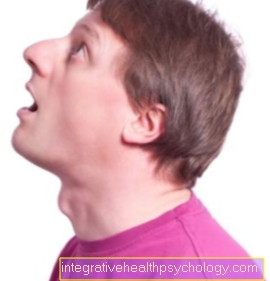
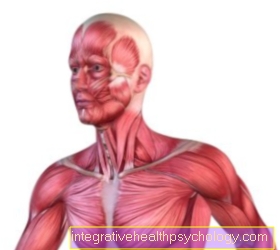
The sternocleidomastoid muscle, also known as the large head turner or head nod, connects the sternum with the occiput. He can turn his head to one side when contracting on one side and nod when contracting on both sides.
The heart is made up of different layers. The innermost layer is the endocardium. Since the endocardium is a very smooth surface, it promotes proper blood flow in the heart and prevents thrombus formation. Inflammation of the
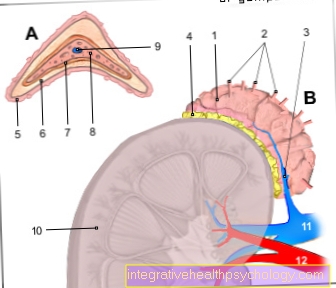
The kidneys are supplied with arteries via the right and left renal arteries, while the venous outflow is via the right and left renal veins. In addition, there are other inflows and outflows via the arteries and veins of the adrenal gland or directly out
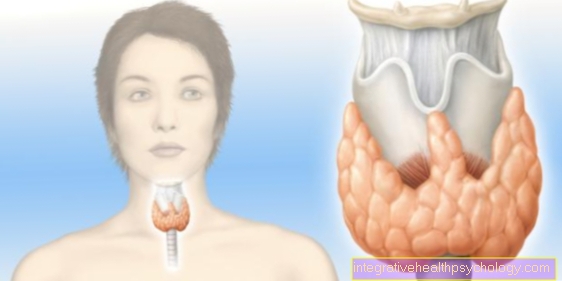
Thyroxine is a hormone produced in the thyroid gland. Thyroid hormones have a very broad spectrum of activity and are of great importance for energy metabolism, growth and maturation. With an underactive thyroid can
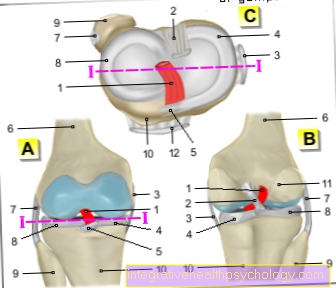
The anterior cruciate ligament connects the thigh bone and the shin bone and serves to stabilize the knee joint. Like the ligament structures of all joints, the anterior cruciate ligament also consists primarily of collagen fibers. It is very
Alpha-1-antitrypsin is a so-called protease inhibitor and is produced in the liver. If the value of this substance is increased, this indicates an acute change in the body, the cause of which should be found. Low values are mostly genetic
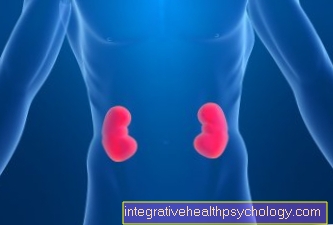
Malformations of the kidneys are not uncommon and usually do not represent a great danger. There are double kidneys, pelvic kidneys or horseshoe kidneys. Cystic diseases of the kidneys are also possible, in which small blisters develop, which in the worst case
- your anatomical information portal. Here you will find information on the subject of "Blood pressure values - which are normal, which are not?" explained in a layman's way.
Autoantibodies are antibodies that classify your own body cells as malignant and are directed against them. This gives rise to a number of dangerous diseases.
As a component of the thyroid hormones, the trace element iodine plays an important role in growth and development. Enough iodine should be ingested through food to prevent dysfunction of the thyroid gland due to iodine deficiency. An iodine deficiency
Prostaglandins belong to the eicosan period and mediate inflammatory processes and fever. They play an important role in protecting the stomach from stomach acid and in blood flow to the kidneys. Prostaglandins are medicated upon induction
EHEC stands for "enterohaemorrhagic Escherichia coli", a bacterium that can cause severe gastrointestinal complaints.
the medical information portal. Here you will find information on the subject of MRSA explained to laypersons.





.jpg)